
Ten Strands advances environmental literacy and supports resilient, climate-ready schools across the TK–12 (transitional/pre-kindergarten- grade 12) system in California
Vision
We envision a world where schools are the foundation of environmental literacy and climate resilience, where every campus is a safe, sustainable, climate-ready community hub, and every student develops the knowledge, skills, and agency to care for the planet and lead solutions in a changing world.
In this future, environmental literacy and climate action are woven throughout education: in curriculum, on campus, in community, and in culture. Students learn in green schoolyards and decarbonized buildings that serve as living laboratories. They graduate with the confidence, skills, and relationships to protect their health, strengthen their communities, and build a just and sustainable future.
California’s 10,000 school campuses can model what is possible for the nation’s public schools.
 Mission
Every student in California deserves learning experiences that help them understand our environment, engage with real-world challenges, and contribute to solutions. Yet many students lack access to these experiences, and this directly affects the well-being of our families, our economy, and our planet. Together, we are empowering students and strengthening schools to create a healthier future for people and our planet.
Climate change is a powerful disruptor of education. In 2025, the school year in California saw more than 55,000 hours of lost instructional time due to extreme weather events, affecting thousands of students (data compiled by our partner UndauntedK12).
Ten Strands addresses these challenges at various entry points to the whole education system: students, teachers, and administrators. We coordinate partners, support educator professional learning, and align school- and community-based education, allowing us to respond to emerging needs, reduce fragmentation across initiatives, and ensure that equity and student-centered outcomes remain at the forefront, Ten Strands’ mission is to strengthen the partnerships, strategies, and systems that advance environmental literacy, ensuring all California TK-12 (transitional/pre-kindergarten-grade 12) students thrive in sustainable, resilient schools and engage in meaningful environmental learning experiences, both in and beyond the classroom.
History
Founded in 2012, Ten Strands recognized that preparing young people for a changing planet requires classroom lessons, alternative learning experiences, eco-friendly schools, and mentorship to advocate for their communities.
Our organization emerged in response to a clear gap: environmental learning was largely absent from California’s TK-12 (transitional/pre-kindergarten-grade 12) classrooms and campuses. Acting as a catalyst and convener, Ten Strands partnered with the California Department of Education, the State Board of Education, and the California Environmental Protection Agency to integrate environmental literacy across the education system. These collaborations produced the Blueprint for Environmental Literacy (2015), a landmark document that established a framework for embedding environment-based education across the state.
Building on that foundation, we launched the California Environmental Literacy Initiative (CAELI) in 2016, a collective action network aligning educators, nonprofits, and state agencies to advance environmental literacy. This initiative has strengthened educator professional learning, shaped curriculum frameworks, and informed state policy.
In 2022, we started working on Seeds to Solutions™, the state’s first-ever solutions-oriented, age-appropriate instructional resources on California environmental issues for grades K–12, aligned with California’s science and history-social science standards. The materials were published spring, 2025.
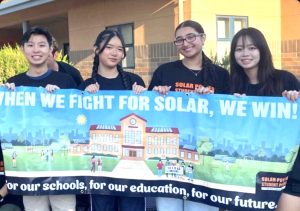
Also in 2022, we launched the Climate Ready Schools Coalition to advance campus decarbonization for children’s health. In 2023, we established both the California Campaign for Outdoor Learning, which aims to support students spending at least 20% of their school time learning outdoors through campus-based experiences, field trips, and residential outdoor school, and the California Youth Climate Policy (CYCP) Leadership Program, which empowers high school students to drive climate action within their schools.
Other core programs include the Data Initiative for Environmental and Climate Action and Technical Assistance Capacity-Building Services. The Data Initiative provides baseline data, analysis, and visualization to support district- and county-level planning for environmental literacy, climate action, and school resilience. Ten Strands collects and validates data across California’s education system, supports partner-driven analyses, and applies lessons learned to inform policy, investment, and systems improvement. For Capacity Building Services, we provide tailored consulting, professional learning, strategic planning, and implementation support to districts, counties, and partners who are embedding environmental literacy, sustainability, and climate resilience into education systems. These services support local adaptation while reinforcing statewide alignment and shared learning.
Today, Ten Strands is California’s leading nonprofit driving systems-level change in environmental literacy and climate action in the TK-12 (transitional/pre-kindergarten-grade system.
.
Activities
Ten Strands seeks to strengthen and scale our initiatives, ensuring that all students, especially those in historically underserved communities, have access to high-quality, relevant learning opportunities focused on environmental and climate literacy and action. Today’s education system is under increasing pressure to prepare young people for a rapidly changing world. Yet, many schools and leaders lack the capacity, coordination, and resources to deliver interdisciplinary, real-world learning that connects academic content to students’ lives and futures.
Several Ten Strands programs meet these challenges: Seeds to SolutionsⓇ , Youth& Community Engagement: The California Youth Climate Policy (CYCP) Leadership Program. California Environmental Literacy Initiative (CAELI)
Seeds to SolutionsⓇ Developed in response to teacher and community demand, Seeds to Solutions is a set of free, solutions-oriented, age-appropriate instructional resources on California environmental issues for grades K–12. We support teachers with instructional materials and professional learning to help them empower students to be environmentally literate, engaged community members prepared to act for the well-being of their families, broader communities, and the environment. The curriculum at different grade levels can be accessed here.
Here is a sample of the 5th-grade Unit Overview on Wildfires, available to educators. Example: Unit 1, lesson 1 (total of 7) lessons for 5th grade, developed in partnership with San Mateo County and now utilized by other California school districts
Unit Question: How can Californians use fire responsibly to prevent destructive wildfires?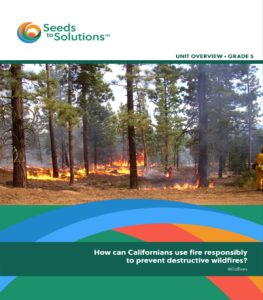
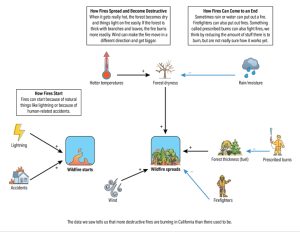
The curriculum starts by engaging students’ prior understanding and emotions about wildfires and eliciting wonder about how best to prevent them. These wonders lead to exploration of the mechanics around wildfires, historical indigenous uses and connections to fire, and the effects of climate change on future fires.
While investigating wildfires, students will:
-
-
- Brainstorm initial ideas of why wildfires in California have become more common and catastrophic.
- Explore how forest management has changed throughout California history and discover how Indigenous people used fire as a tool for thousands of years.
- Investigate how climate change is reducing the ability to use prescribed and cultural burns to mitigate the potential of large, damaging wildfires.
- Use the Class Final Explanatory Model to develop an action plan addressing one or more aspects of wildfires in California.
-
Youth& Community Engagement: The California Youth Climate Policy (CYCP) Leadership Program empowers high school students to drive climate action within their schools. The program guides students from knowledge to action, preparing them to influence climate policy and foster transformational change in California’s education system. Participants apply their learning by leading campaigns to pass or enhance climate policies within their schools or districts.
How Students Are Prepared: Orientation & Retreat :The program opens with a virtual orientation (about 1.5 hours) where students meet one another and get familiar with the program. This is followed by a two-day virtual summer retreat (about 3 hours per day) that builds the foundation for everything that follows. Students complete the required “Pre-Learning Retreat Activities” ahead of each retreat session.
The retreat is designed to:
-
- Build a shared understanding of why environmental and climate action matters
- Dive into definitions, principles, frameworks, and strategies for climate action in schools
- Conduct a preliminary analysis of each student’s own school context, identifying barriers and opportunities for advocacy
- Build community and networking among peers from across the state who share similar interests
Curriculum: Monthly Workshops From August through December, students attend 5 monthly virtual workshops (2 hours each, These workshops are meant to build practical skills for running an advocacy campaign, deepen students’ knowledge of the broader climate movement, and continue community-building among the cohort (Thursday evenings) that build skills in step with their campaign timeline:
-
- Field Research and Coalition Building
- Coalition Building and Introduction to Policy Actions
- Presenting to School Boards and Campaign Metrics
- Presentation Preparation, Policy Peer Review, and Support for Board Presentations
- Campaign Follow-up and Case Study Preparation
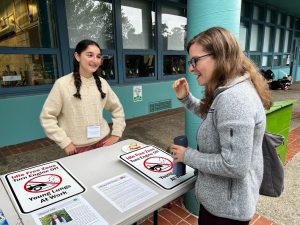
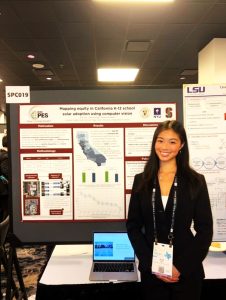
A standing reference resource, the CYCP Resource Catalog for Advocacy Campaigns, supports students throughout the curriculum.
The Project: Climate Policy Campaign The core deliverable of the program is an individually led advocacy campaign: each student designs and carries out a campaign to pass a new climate policy or strengthen an existing one that supports climate literacy and action at their school or district (or school, if private). Campaigns run from the start of the program and are expected to be completed by December. The intended outcome is hands-on experience across the full arc of a real project: development, implementation, and evaluation, not just learning about policy advocacy in the abstract.
Mentoring & Coaching Throughout the program, students have individual coaching calls with adult mentors from the Sierra Club. Mentors guide students through each phase of their campaign – brainstorming, strategy, and implementation – and also support each student’s personal leadership development. Mentors are professionals committed to climate action and can expose students to related career paths.
Capstone & Evaluation of Student Work The program concludes with a Case Study and Capstone Graduation (a virtual session in mid-January). Each student submits a written case study and delivers an oral capstone presentation reflecting on:
-
-
- Knowledge gained over the course of the program
- Skills developed
- Challenges and successes in their climate policy campaign
- What it means, to them, to be a youth climate leader
-
Completed case studies are made public after the program ends. Note: evaluation of student work is reflection-based (the case study and presentation), rather than a formal, scored rubric for the campaign itself. The program emphasizes documented growth and real-world outcomes over grading.
Program-Level Evaluation & Feedback Separate from student project evaluation, the program tracks its own effectiveness through:
-
-
- Pre-program and post-program surveys measuring knowledge, skills, and mindset toward climate leadership
- Exit tickets after each workshop and retreat session, to gauge content and facilitation effectiveness
- Demographic surveys focused on equity metrics
-
California Environmental Literacy Initiative (CAELI) CAELI is a statewide, cross-sector initiative that strengthens environmental and climate education by aligning nonprofits, educators, state agencies, and funders around shared goals. Through leadership councils, working groups, and collective storytelling, CAELI helps scale impact and advance
We continue to support CAELI’s collective action projects, professional learning opportunities, and the statewide support ecosystem. Initiatives such as webinars, toolkits, communities of practice, and regional meet-ups will help educators and partners increase capacity, strengthen systemic adoption, and amplify student engagement. With sustained investment and collaboration, CAELI will build on the foundation of the past decade to advance environmental literacy in equitable, inclusive, and impactful ways for California’s students and communities.
Governance & Structure CAELI operates under a shared leadership model, with Ten Strands providing backbone support. CAELI Members meet quarterly as a full network; between quarterly meetings, members participate in affinity- and topic-based communities of practice. The network’s work is organized around five domains defined in its Theory of Action (below) and a portfolio of specific programs and projects that rotate or continue from year to year (see Programs and Activities, below).
Theory of Action CAELI’s Theory of Action is built on a statement of purpose, four guiding principles, and five domains of work.
Statement of Purpose Education in, for, and about the environment is treated not as “enrichment” but as a better way for all students to learn all the time. CAELI works to change the education system so that students at every grade level, with special emphasis on students of color and low-income students, routinely have outdoor and classroom-based environmental experiences that improve learning and physical, emotional, and psychological well-being, while preparing students to take action on problems in their own lives and communities.
Guiding Principles
-
- Equity, Justice, and Accessibility — programs are designed with and for Indigenous students, students of color, students with disabilities, and students from low-income communities, who face the greatest environmental and climate burdens and the biggest barriers to outdoor learning.
- Scalability — work must build infrastructure that can expand statewide to reach all 5.8 million CA students across roughly 1,000 districts, with a focus on equipping district-level decision-makers.
- Shared Leadership and Collaboration — CAELI integrates public-private partnerships and multi-sector, community-based collaboration, rather than relying on top-down delivery.
- A Wide Range of Environment-Based Experiences — every student should have recurring environmental learning in classrooms, schoolyards, parks, and community programs, and attend at least one residential outdoor science program, with attention to student voice, civic engagement, and leadership development.
The Five Domains
-
- Community Partnerships — building power-sharing relationships with community-based organizations to design programs that address local priorities and environmental justice.
- Policy and Advocacy — developing an actionable, equitable statewide policy agenda for environmental literacy and student climate leadership.
- Sustainable and Climate Ready Schools — supporting campuses and grounds that reduce emissions, protect health, and offer hands-on learning in sustainable technologies.
- Sustainable Funding — building strategic partnerships for multiple, predictable funding streams.
- Teaching and Learning — ensuring effective, research-based classroom and outdoor instruction, high-quality instructional materials, and statewide professional learning systems.
Programs and Activities (2025–26 Season)CAELI’s current activity is organized into three categories: Virtual Communities of Practice, the Green Ribbon Initiative, and In-Person Meet-Ups and Fellowships. Details on each, including specific session topics and cadences, are below.
- Virtual Communities of Practice
These are recurring, free virtual meeting series for specific professional affinity groups, designed to share best practices, build skills, and network across the state.
County Office of Education (COE) Community of Practice Now in its sixth year (2026–27). Meets every other month, virtually, for COE staff in any role who champion environmental literacy. Sessions blend networking, professional learning, and discussion of self-selected topics.
Stated outcomes:
-
-
- Build COE capacity to serve as regional ‘backbone’ support for districts implementing whole-school sustainability (campus, curriculum, community, culture).
- Support regular access to environmental and outdoor learning for students, especially the most vulnerable and marginalized.
- Develop district-wide plans spanning all grade levels, with emphasis on low-income students and students of color.
- Integrate sustainability principles into COEs’ own core operations.
- Implement a whole-school sustainability framework across curriculum, campus, community, and culture.
-
Sample topics covered across past meeting cycles: Green Ribbon Schools and Districts; Curriculum & Instruction Leverage Points; Scaling Professional Learning; Expanded Learning; Community-Based Partner Networks; Greening School Facilities; Youth Programs and youth civic engagement; Early Learning; Conference sharing/climate education; and an annual welcome and an annual celebration/reflection session. Each meeting includes registration, a slide deck, and a video recording archived on the CAELI site.
District Community of Practice A statewide network for district office staff (the California District Environmental Leaders CoP), meeting six times per year on Fridays, 11:00 am–12:30 pm. 2025–26 meeting dates: September 5, October 3, December 5, February 6, March 20, and May 8.
Stated goals:
-
-
- Build a community of district practitioners and partners.
- Create, curate, and share environmental literacy and sustainability resources.
- Build capacity for district-level planning.
- Cultivate, support, and showcase leading-edge exemplars.
-
Recent session topics: Child Nutrition Services, Living School Yards, and a year-end ‘Celebrate, Reflect, & Dream’ session. Each meeting is recorded, and slides are posted.
Community-Based Partner Community of Practice A parallel affinity space for community-based organizations (CBOs) that deliver environmental education, focused on strengthening their role in the broader CAELI ecosystem.
Goals:
-
-
- Strengthen connections between practitioners
- Share resources and best practices with organizations of similar size, scope, and function area
- Develop a network of resources and opportunities to grow the sphere of influence and impact by CBO’s in the field.
-
An overview of building school and district partnerships is linked here.
- CAELI Green Ribbon Initiative This initiative supports increased participation in the U.S. Department of Education’s Green Ribbon Schools program (administered in California by the CDE), which recognizes schools for excellence in resource efficiency, health and wellness, and environmental/sustainability education (organized around three ‘pillars’: environmental impact, health, and curriculum).
Activities supporting this initiative include:
-
- Green Ribbon Resources Website — a dedicated site providing applicants with materials needed to succeed in the recognition program, plus a library of ‘achiever stories’ from past award winners.
- California Green Ribbon Achievers and Applicants Network — meets quarterly, giving participants a chance to network, share best practices, and pursue the highest tier of Green Ribbon recognition.
- Green Ribbon Technical Assistance Working Group — a group of statewide Green Ribbon champions who provide direct technical assistance to districts and schools pursuing the award.
- In-Person Meet-Ups, Exchanges, and Fellowships In 2025–26, CAELI meet-ups are held virtually or in person, centered on affinity connections or shared themes:
-
- Green California Schools and Higher Education (GCSHE) Summit and Exposition — district leaders have hosted meet-ups at this summit for the past three years (2022, 2023, 2024), and it has recently expanded to include a pre-summit gathering (2025 recap published).
- Regional District Climate Literacy Exchanges — two Bay Area Climate Literacy Exchanges (2024, 2025) and a Southern California Exchange (2024); CAELI is supporting a 2026 Bay Area Climate Literacy Exchange.
Resource and Training Projects (2025-2026) CAELI supports in-depth training programs that combine knowledge and skill-building, opportunities to connect and network with peers, guided implementation coaching, and accountability structures to support action or a commitment to it. Projects for 2025–26 include:
-
- COE Fellowship – The CAELI COE Fellowship is a 9-month program designed to support County Offices of Education (COEs) in launching or strengthening Environmental Literacy and Sustainability Initiatives. Fellows may also focus on integrating environmental and climate literacy into existing COE programs and initiatives.
- CAELI Equity Integration – This project focuses on implementing the equity-related practices outlined in the CAELI Equity Guidebook across all CAELI members. The group may lead professional development sessions during CAELI Quarterly Meetings and offer additional support through office hours, project consultation, or by curating and sharing stories from the field.
- CAELI Partner Portal – This project focuses on continuing to grow the number of partners on the CAELI Partner Portal and coordinating with the County Offices of Education that host microsites.
Our work is urgent as schools seek to modernize instruction, increase student engagement, and prepare young people with the knowledge, skills, and agency required for active participation in their communities and the global economy.
Audience/s Served All of Ten Strands’ programs are designed to serve, directly or indirectly, students, educators, administrators, and communities across California. While California is home to 5.8 million K-12 public education students, 1,000 school districts, 10,000 school campuses, 300,000 educators, and one of the world’s largest economies, significant disparities persist across regions, communities, and school systems, highlighting the need for continuing investment and coordination across the education system.
Students: Approximately 60% of California’s public school students are from low-income households, and many attend schools in communities experiencing high rates of poverty, housing instability, and food insecurity. Educational indicators reflect these inequities. Literacy and academic achievement vary widely by income, race, language, and geography. English learners, who comprise nearly one in five California students, often face additional barriers related to language access, instructional resources, and family engagement. High school graduation and postsecondary readiness rates remain lower in under-resourced communities like rural areas and communities of color.
Educators face their own challenges. Teacher shortages, high turnover, and burnout are widespread, especially in high-need districts. Rising inflation, housing costs, and stagnant wages have made it increasingly difficult for educators to live in the communities they serve, contributing to instability and reduced instructional capacity.
Communities: California is the nation’s most urbanized state, with 94.2% of residents living in urban areas, yet poverty remains stubbornly high. By the Supplemental Poverty Measure, about 7 million Californians lacked resources for basic needs in 2024. Climate risk compounds this inequity. Census tracts with majority Black, Latino, or Native American populations are 50% more
vulnerable to wildfires than other tracts, and Native Americans are six times more vulnerable to wildfire impacts than white residents. California’s roughly 109 federally recognized tribes are disproportionately exposed because tribal communities are often situated in rural, frontier areas where wildfire risk is highest. Meanwhile, low-income households face higher rates of “compound risk days” (combined extreme heat and unhealthy air quality) worsened by wildfires and often lack the internet access needed to receive timely evacuation warnings.
These socioeconomic conditions underscore the need for coordinated, equitable education strategies that support both students and educators, ensuring learning environments are responsive, inclusive, and connected to the realities of California’s diverse communities. Ten Strands addresses these gaps at every level of the education system.
Successful Impact Ten Strands’ impact is achieved through both direct and indirect services, with a focus on systems change, capacity building, and partner coordination.
Seeds to Solutions: Educator Professional Learning In 2025, we completed Seeds to Solutions, a California-specific curriculum that helps students investigate and address urgent challenges like wildfires, extreme heat, and air pollution. Every K–12 teacher now has free access to these age-appropriate, culturally relevant, trauma-informed instructional resources. Now our goal is to ensure the curriculum is adopted and implemented at scale by investing in teacher professional learning.
Impact Targets for the 2026-2027 School Year:
-
-
- 2,000 educators, administrators, and partner staff supported through cross-initiative professional learning and technical assistance
- 60,000 students benefit from the curriculum
-
Youth & Community Engagement: California Youth Climate Policy (CYCP) Leadership Program
Ten Strands firmly beli eves that youth voice is crucial to solving the climate crisis, so in 2023, we launched the California Youth Climate Policy (CYCP) Leadership Program.
-
- To further scale this program, we are looking to expand the number of students and mentors participating and secure a California State Seal of Climate Literacy. The Seal will create statewide recognition for students who demonstrate climate literacy, civic engagement, and real-world climate action and make climate literacy visible, valued, and systemically supported—aligning K–12 education with workforce, higher education, and civic priorities. CYCP has successfully graduated 137 students over three cohorts.
- Growing the reach of the California Youth Climate Policy Leadership Program by expanding to new regions of California, amplifying unique student voices, or possibly piloting a middle school cohort.
- Continue supporting CAELI’s collective action projects, professional learning opportunities, and the ecosystem of support across the state. Initiatives such as webinars, toolkits, communities of practice, and regional meet-ups will help educators and partners increase capacity, strengthen systemic adoption, and amplify student engagement. With sustained investment and collaboration, CAELI will build on the foundation of the past decade to advance environmental literacy in equitable, inclusive, and impactful ways for California’s students and communities.
In response to demand from CYCP, we launched the California Youth Environmental Data (CYED) Leadership Program in 2026. This initiative empowers California high school students to become community scientists and environmental data leaders. CYED is a statewide co-curricular program where students assess environmental and climate action on their school campuses through guided, data-driven projects. There are 54 students participating in our pilot program.
act Targets for the 2026-2027 School Year:
130 youth leaders and community representatives engaged in both programs via advisory roles, feedback sessions, mentorship, internships, and storytelling activities that inform program design and move policy forward
California Environmental Literacy Initiative (CAELI) September 2025 marked a decade since the release of California’s Blueprint for Environmental Literacy, a vision that has grown into a statewide powerhouse: the California Environmental Literacy Initiative (CAELI). This past year, CAELI’s Green Ribbon Campaign expanded recognition statewide, allowing more communities to be honored for their investments in environmental literacy and sustainability. This prestigious honor recognizes institutions that demonstrate leadership in whole-school sustainability by reducing environmental impact, improving health and wellness, and providing high-quality environmental education. Twelve of this year’s thirty-nine (30%) honorees for the 2025 California Green Ribbon School Award are active participants in CAELI, underscoring the network’s strength, innovation, and collective impact.
Impact Targets for the 2026-2027 School Year
-
- 120 nonprofit and public-sector partners engaged through quarterly convenings, technical assistance, and shared strategy
- Approximately 1,000 educators supported across districts, county offices of education, and partner organizations
- Indirect reach to 250,000 students through improved access to high-quality environmental education and outdoor learning
Recommendations for Replication and/or Adaptation
Ten Strands has learned a great deal over more than a decade of systems-level work in California. Organizations looking to build environmental literacy programs in their own states or regions are encouraged to consider the following:
Creating standards-aligned curriculum and providing teacher professional development. Start with standards-aligned curriculum and invest in teacher professional learning. Curriculum that connects to existing academic standards lowers the barrier to adoption. Teachers can integrate environmental content without sacrificing instructional time. Ten Strands’ Seeds to Solutions™ was built specifically to align with California’s science and history-social science standards, making it easier for educators to say “yes”. Equally important is pairing curriculum with sustained professional development: one-time trainings rarely change practice. Prioritize communities of practice, coaching, and ongoing learning opportunities that build educator confidence and capacity over time.
Empowering young people as leaders, not just learners. Students are among the most credible and compelling voices for climate action. The California Youth Climate Policy Leadership Program demonstrates that high schoolers, when given the tools, mentorship, and platform, can drive real policy change within their schools and communities. Programs looking to replicate this model should create structured pathways for youth to engage in civic processes, pair students with mentors in relevant fields, and consider pursuing formal recognition mechanisms, such as a state Seal of Climate Literacy, to institutionalize and validate student achievement.
Establishing a coalition to coordinate education and climate outcomes. Build a coalition to align partners and reduce fragmentation. Environmental literacy touches curriculum, campus infrastructure, community health, and policy. No single organization can move all of those levers alone. CAELI’s collective action model, which brings together nonprofits, school districts, county offices of education, and state agencies, has been central to Ten Strands’ statewide impact. A strong coalition creates shared language, coordinates efforts, amplifies individual partner impact, and builds the political will needed for lasting systems change. Start by mapping existing partners in your region and identifying gaps or duplications in coordination.
Contact
Website: https://tenstrands.org/
Karen Cowe, CEO
Phone number: 510.812.5493
Email: kcowe@tenstrands.org
Andra Yeghoian, Chief Innovation Officer
Phone number: 925.348.5337
Email: ayeghoian@tenstrands.org